
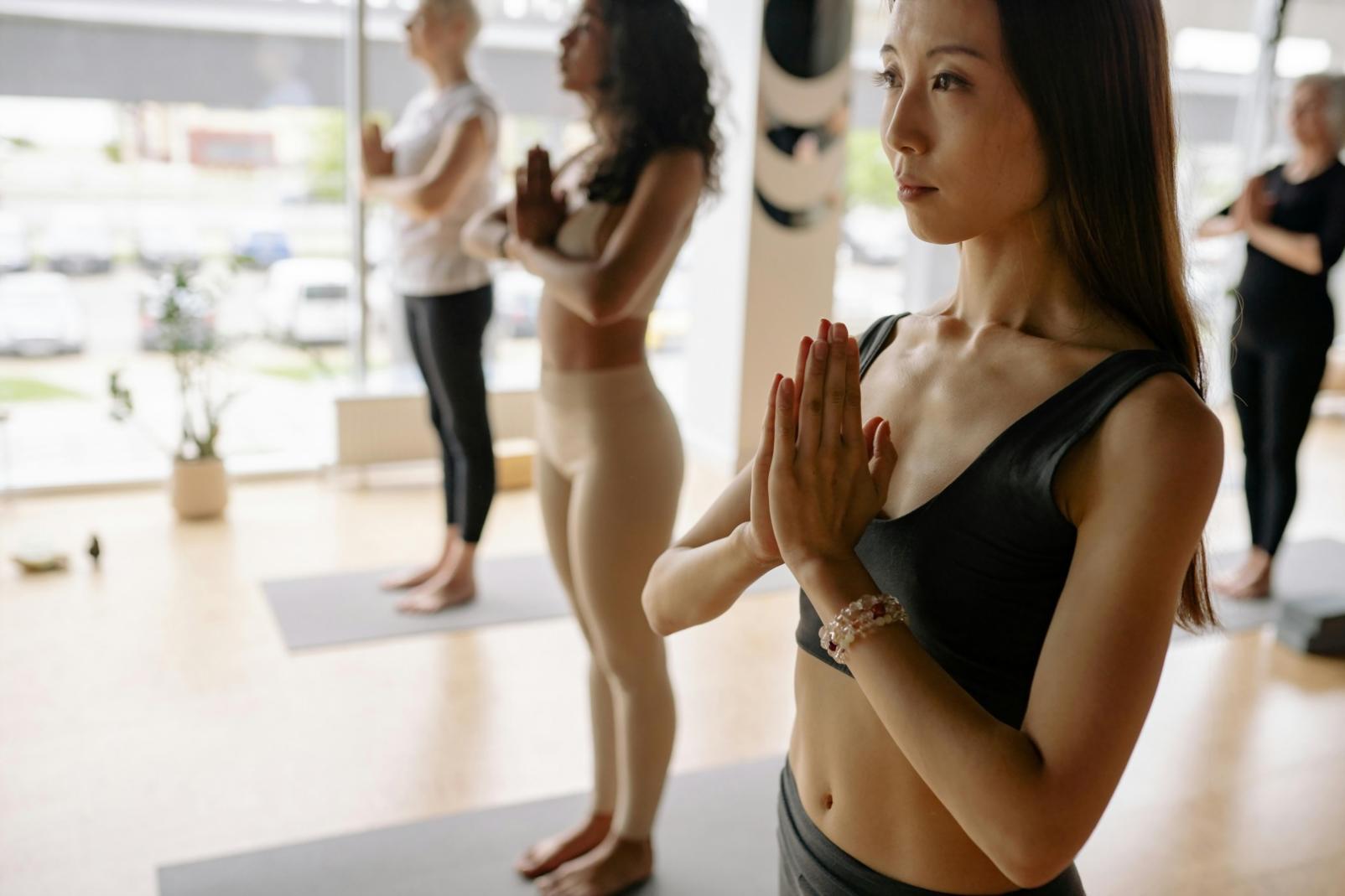
Starting yoga at 50, 60, or later is common and completely reasonable. The body at that stage has different needs than at 25 — joints are less forgiving, recovery takes longer, and the tolerance for being pushed too hard is appropriately lower. This program is designed with that in mind from the beginning, not as an afterthought with a few modifications bolted onto a younger person's curriculum. Every pose choice, every progression, and every pacing decision accounts for the realities of an older body rather than treating them as obstacles.
The program covers 14 poses drawn from classical hatha yoga, all adapted for participants who may have reduced range of motion, joint sensitivity, or a history of injury. Chair yoga variations are included for every floor pose, so participants who cannot easily get up and down from the floor have a complete alternative rather than a partial one. Standing poses are practiced near a wall or chair back for balance support in the early weeks.
What changes as we age
Connective tissue becomes less elastic. Bone density may be reduced. Balance often deteriorates slightly without regular practice. Muscle mass declines without resistance activity. Yoga addresses some of these directly — balance work and weight-bearing poses are particularly relevant — and it supports others indirectly through improved body awareness and controlled breathing under mild physical stress.
Structure of the program
Eight weeks, two sessions per week. Sessions run 35 to 45 minutes. The first four weeks focus on individual poses and breath coordination. The second four weeks build short sequences and introduce slightly more demanding variations for those who are ready. Nobody is required to move to harder variations — the standard versions remain fully valid throughout.
- Mountain, Tree, Warrior I for standing strength and balance
- Seated Forward Fold, Supine Twist, Legs Up the Wall for flexibility and recovery
- Cobra and Bridge for back strength
- Chair-based alternatives for all floor poses
The instructor, Halyna Borysenko, has taught yoga specifically to older adults for eleven years and holds additional training in movement for osteoporosis and arthritis. She does not use the word gentle as a synonym for easy — some sessions are genuinely challenging in a sustained, low-impact way.
A written health intake form is completed before the program begins. This is not bureaucratic paperwork — it directly shapes how Halyna gives feedback and adjustments to each participant.
8-Week Program Breakdown
-
Weeks 1 and 2 — Orientation and Standing Poses
Mountain, Tree with wall support, Warrior I. Breathing patterns and basic alignment. Chair modifications introduced from session one.
2 sessions per week, 35 minutes each -
Weeks 3 and 4 — Floor and Seated Poses
Cobra, Bridge, Seated Forward Fold, Supine Twist. Spinal mobility and lower body flexibility. All poses available in chair versions.
2 sessions per week, 40 minutes each -
Weeks 5 and 6 — Combining Poses
Short sequences of 3 to 4 poses. Warrior I to Low Lunge. Seated twist to forward fold. Introduction of Legs Up the Wall for end-of-session recovery.
2 sessions per week, 40 minutes each -
Weeks 7 and 8 — Building a Practice
Two full 35-minute sequences: one standing-focused, one floor-focused. Guidance on continuing practice independently after the program ends.
2 sessions per week, 45 minutes each
Support and materials
Health intake review before start, video library with chair and standard versions side by side, illustrated pose reference guide, and access to a group message space for participants.